
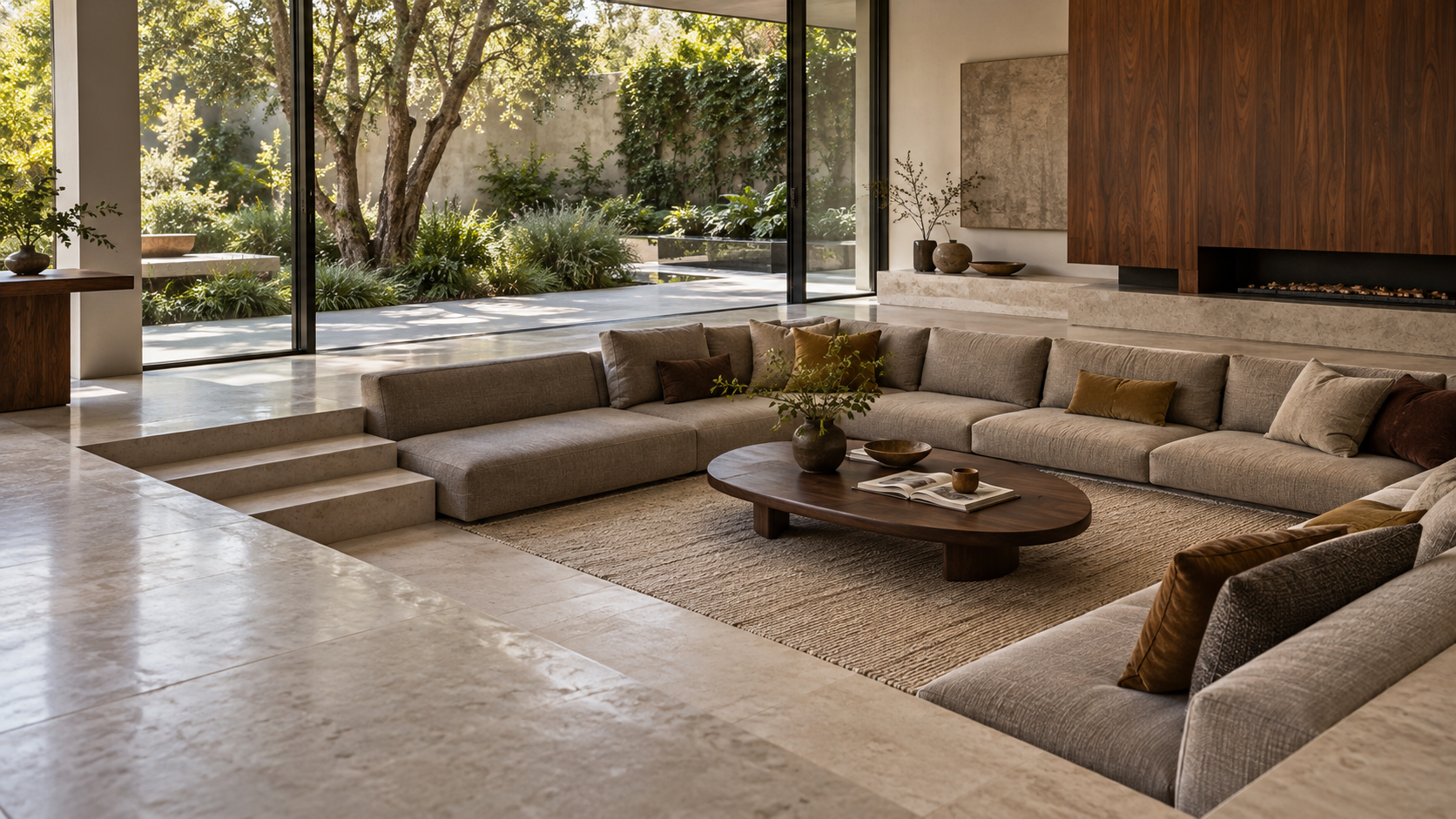
In 1957, a modern house in Columbus, Indiana, offered its guests an unusual invitation: walk down four steps to take a seat.
At the centre of Miller House was a conversation pit, a cushioned lounge set below the surrounding floor. Architect Eero Saarinen designed the house, while Alexander Girard created its interiors. Together, their work demonstrated how a simple change in level could give an open room a remarkably intimate centre.
The lowered seating preserved views across the surrounding space while bringing people together within a clearly defined area. Girard filled it with colour and texture, and its cushions and slipcovers changed with the seasons. Within the precise geometry of the architecture, textiles introduced variety, warmth and a sense of personal life. The room could remain architecturally consistent while its atmosphere evolved.
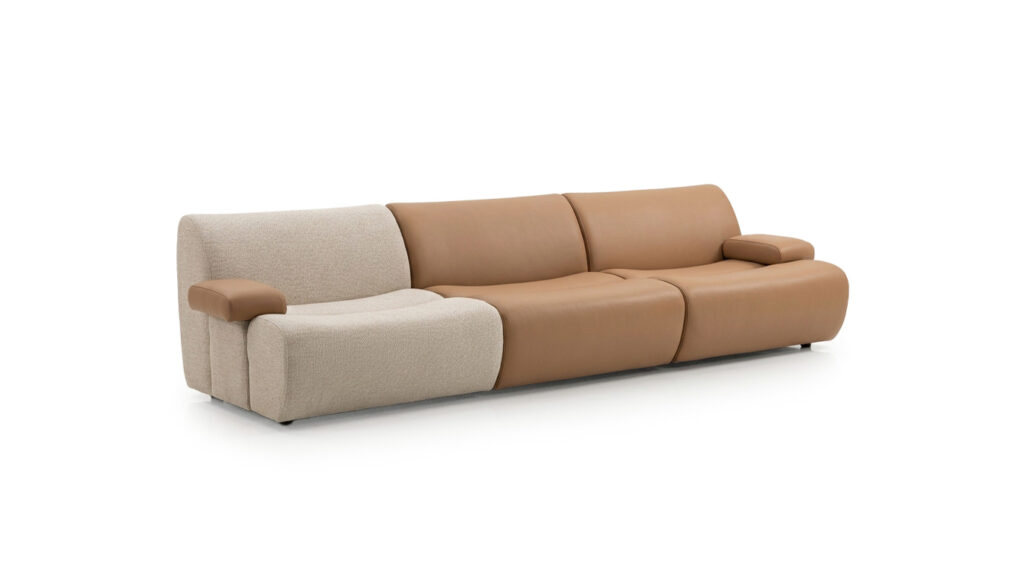
Sixteen years later, another approach to living closer to the floor appeared in France. In 1973, Michel Ducaroy designed Togo for Ligne Roset: a family of foam seats with deeply quilted upholstery. Its distinctive silhouette had an unexpectedly ordinary source of inspiration. Ducaroy described a toothpaste tube folded back on itself, an everyday object whose creases suggested an entirely new furniture form. Advances in foam and padding gave him the freedom to translate that observation into a seat.
Read together, these designs suggest a compelling way to approach an interior: begin with the position of the body, then consider the room around it. The height at which we sit changes our relationship with windows, tables, lighting and the people beside us. Furniture establishes the viewpoint from which a home is experienced.
This is where low seating becomes particularly interesting. A lower back can leave more of a window visible from across the room. A broad, horizontal sofa can give a tall space a grounded centre. When seats face one another around a carefully positioned table, the arrangement creates a natural setting for conversation.
The surrounding details deserve equal attention. A coffee table should feel comfortably within reach. Lighting needs to work from the seated position. Seat height, depth and support should be considered together, so that the pleasure of the silhouette continues when someone actually sits down.
For a contemporary interior, these historical examples offer a useful starting point. Consider the view over the furniture, the distance between people, the texture beneath a hand and the ease of reaching for a cup. Through these small relationships, a room acquires its character.
Sometimes, a different way of living begins with a lower point of view.

 No products in the cart.